
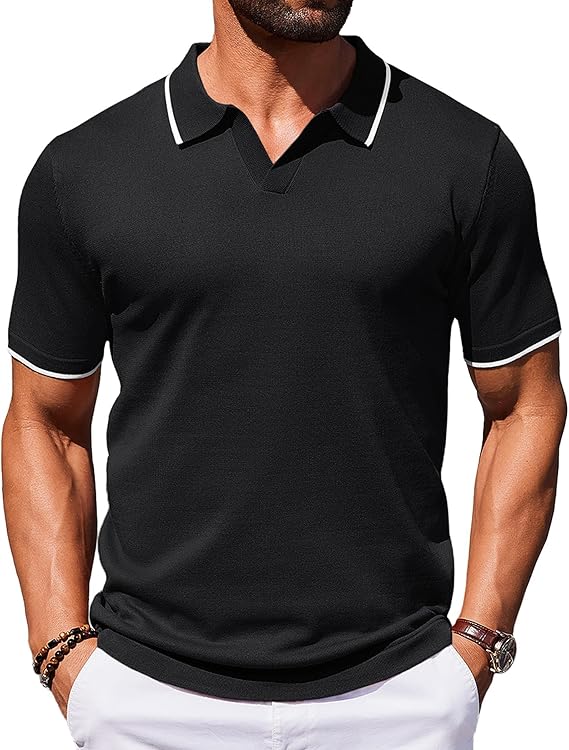
Men Polo T shirts

Elevate your everyday style with this men's black polo shirt. Crafted from premium cotton pique, breathable fabric, it features a stylish collar with white trim, short sleeves, and a comfortable slim fit. Perfect for both casual and semi-formal occasions, this mens polo t-shirt pairs well with jeans or trousers. Comfortable, versatile, and effortlessly cool — ideal as smart casual wear or a branded uniform shirt for your team.

Custom T-Shirt Manufacturing Specifications

1. Material Options
Select the fabric that fits your brand and use case:

  • Combed Cotton 100% – Ultra-soft, breathable, and skin-friendly. Made of 100% Cotton combed and Carded Yarn count 24s,30s,36s,40 and some time we use even 52s. Preferred for retail fashion, premium merchandise, and everyday comfort wear.

  • Cotton-Poly Blend – Bled with 65%Cotton we use 35%Polyester. Balances natural softness with added strength and shape retention. Great for corporate apparel, event uniforms, and promotional clothing. We use this bled for Low-shrink and color-stable.

  • Performance Polyester – Athletics male and female-like skin fit fabric, light weight and sweat repellent. We use 100% Polyester which is also called 100% microfiber or Dri Fit Fabric. Its features moisture management, quick-dry properties, and lightweight comfort. Ideal for team kits, gym wear, and active lifestyle collections.

3. Neckline & Construction Features
Built for longevity and a clean finish:

  • Rib Knit Choices: We use Classic 1x1 rib or reinforced 2x2 rib collar to prevent stretching

  • Neck Design: Standard crew profile with tailored opening for contemporary fit

  • Internal Finishing: Neck taping and shoulder taping included to maintain shape wash after wash

  • Seam Work: Twin-needle sleeve and bottom hems for a flat, professional look

4. Branding & Personalization Techniques
Flexible decoration options for any order size:

  • Screen Print – Bold, durable ink application suited to high-volume runs

  • DTF Transfer – Detailed, vibrant graphics with excellent wash fastness; works on light/dark fabrics

  • Direct-to-Garment (DTG) – Full-color, photorealistic prints with a soft hand feel; ideal for on-demand

  • Machine Embroidery – Raised texture for logos, crests, and text; flat or 3D puff options

  • Finishing Add-ons: Custom woven labels, tagless heat transfers, barcoded size strips, branded packaging

FAQ

1. General Definitions & Activewear Trends

What is the difference between activewear and sportswear?
Sportswear is performance-driven apparel designed for specific sports — think soccer kits, tennis skirts, or running singlets. It prioritizes function, movement, and sport-specific features. Activewear is broader: it covers workout clothes for gym training, yoga, HIIT, and fitness activities, but with more focus on comfort and style. Many activewear pieces are now athleisure-ready, meaning you can wear them beyond the gym.

What does "athleisure" mean?
Athleisure is a hybrid category that blends athletic performance features with casual, everyday style. Think moisture-wicking leggings, joggers, and hoodies you can wear to brunch, travel, or work-from-home. Key features include four-way stretch, breathable fabrics, and sleek, minimalist design that transitions from workout to streetwear.

Is activewear considered appropriate for casual everyday wear?
Yes. The rise of athleisure trends has made premium activewear socially acceptable for errands, coffee runs, travel, and even casual offices. Look for pieces with minimal branding, neutral colors, and elevated details like seamless construction or luxe fabrics to keep it polished.

Why is high-quality activewear so expensive?
Premium performance apparel costs more because of advanced fabric technology, specialized construction, and R&D. You’re paying for moisture-wicking nylon, spandex blends, flatlock seams, four-way stretch, UPF protection, and durability through 100+ washes. Cheaper options often pill, lose stretch, or become see-through after a few workouts.

Will the athleisure trend ever go out of style?
While fashion trends shift, the demand for comfortable, functional clothing isn’t going anywhere. Athleisure evolves — oversized fits, retro cuts, and sustainable materials keep it fresh. As work-from-home and wellness culture grow, versatile performance lifestyle apparel remains a wardrobe staple.

2. Fabric & Material Science

What is the best moisture-wicking fabric for heavy sweating?
Polyester and nylon blends with engineered yarns are top for sweat-wicking performance. They pull moisture away from skin to the fabric surface where it evaporates fast. Look for terms like “quick-dry,” “hydrophobic yarns,” or “advanced sweat management.” Bonus if it has anti-odor or anti-microbial treatment.

What is the difference between polyester, nylon, and spandex in activewear?

  • Polyester: Durable, wrinkle-resistant, and excellent at moisture-wicking. Holds color well. Best for tees and shorts.

  • Nylon: Softer hand-feel, stronger than polyester, and more abrasion-resistant. Ideal for leggings and compression wear.

  • Spandex/Lycra/Elastane: Provides four-way stretch and recovery. Never used alone — it’s blended 10-25% for shape retention.

Can you wear 100% cotton clothes for intense gym workouts?
Not recommended. 100% cotton absorbs sweat and holds it, making garments heavy, slow to dry, and prone to chafing. It also loses shape when wet. Cotton is fine for light yoga or walking, but for HIIT, running, or weight training, choose performance poly blends or nylon-spandex.

What are UV-protective (UPF) fabrics, and do they actually work?
UPF fabrics are tightly woven or treated textiles that block UVA/UVB rays. A UPF 50 garment blocks 98% of UV radiation. Yes, they work — but only if the fabric is labeled UPF. Regular polyester offers some protection, but certified UPF activewear is best for outdoor running, hiking, and training.

How do sustainable or recycled materials perform in activewear?
Modern recycled polyester (rPET) and recycled nylon from plastic bottles or fishing nets now match virgin fibers in stretch, durability, and moisture-wicking. Many are GRS certified. Pair them with eco-friendly dyes and you get sustainable activewear that performs without sacrificing planet impact.
Keywords: recycled activewear, eco-friendly gym clothes, sustainable leggings, rPET fabric, GRS certified apparel

3. Fit, Function, & Selection

Should activewear and gym clothes fit tight or loose?
It depends on activity. Compression fit is best for running, HIIT, and weightlifting — it supports muscles and reduces chafing. Relaxed or regular fit works for yoga, stretching, or loungewear. The rule: no excess fabric to snag, but not so tight it restricts movement or cuts circulation.

What should I look for when buying a high-impact sports bra?
For high-impact sports bras, prioritize: encapsulation + compression design, wide underband, adjustable straps, molded cups, and racerback or cross-back for support. Fabric should be moisture-wicking with minimal seams. Look for “bounce control” or “tested for running/HIIT.”

How do I choose the best leggings that won't roll down or show through (squat-proof)?
Choose high-waisted leggings with a wide, power-mesh waistband and gusseted crotch. Fabric should be opaque with 4-way stretch and 20-25% spandex for recovery. To test “squat-proof,” check in bright light — if you see skin, it fails. Avoid thin, single-layer fabrics.

What is the purpose of compression clothing during and after a workout?
Compression wear applies gentle pressure to muscles, which can improve blood flow, reduce muscle oscillation, and delay fatigue during training. Post-workout, it may help reduce soreness and speed recovery. Look for graduated compression and targeted zones.

What are the best activewear pieces for transitioning from the gym to running errands?
Pick athleisure staples: sleek black leggings, tapered joggers, oversized hoodies, cropped tanks, and matching sets in neutral tones. Add a structured jacket or crossbody bag to elevate the look. Seamless or ribbed fabrics look more “lifestyle” than shiny performance gear.

4. Care & Maintenance

How do you properly wash activewear so it doesn’t lose its stretch?
Turn garments inside out, use cold water, gentle cycle, and mild detergent. Skip fabric softener — it coats fibers and kills moisture-wicking. Wash performance fabrics with similar items, not towels or denim. Air dry or tumble low. This preserves elasticity and fabric tech.

Why do my workout clothes still smell bad after being washed, and how do I fix it?
Odor happens when bacteria + body oils get trapped in synthetic fibers. Fix it by: pre-soaking in vinegar + water, using sports detergent, avoiding softener, and drying fully. For deep clean, use an enzyme cleaner or activewear-specific wash.

Can you put activewear and leggings in the dryer?
High heat damages spandex and elastic fibers. If you must, use low heat or air-fluff only. Best practice: hang dry or lay flat. Heat breaks down stretch recovery and causes pilling, shortening the life of your premium leggings and sports bras.

How often should you replace your gym clothes and sports bras?
Replace sports bras every 6-12 months or 30-40 washes — they lose support as elastic wears out. Leggings and tops last 1-2 years with proper care. Replace when they pill, sag, become see-through, or lose compression.

How do you prevent chafing caused by activewear seams?
Choose flatlock seams or seamless construction — they lie flat against skin. Avoid thick, raised seams in high-friction areas like inner thighs. Use anti-chafe balm for long runs. Proper fit also matters: too loose causes rubbing, too tight causes digging.